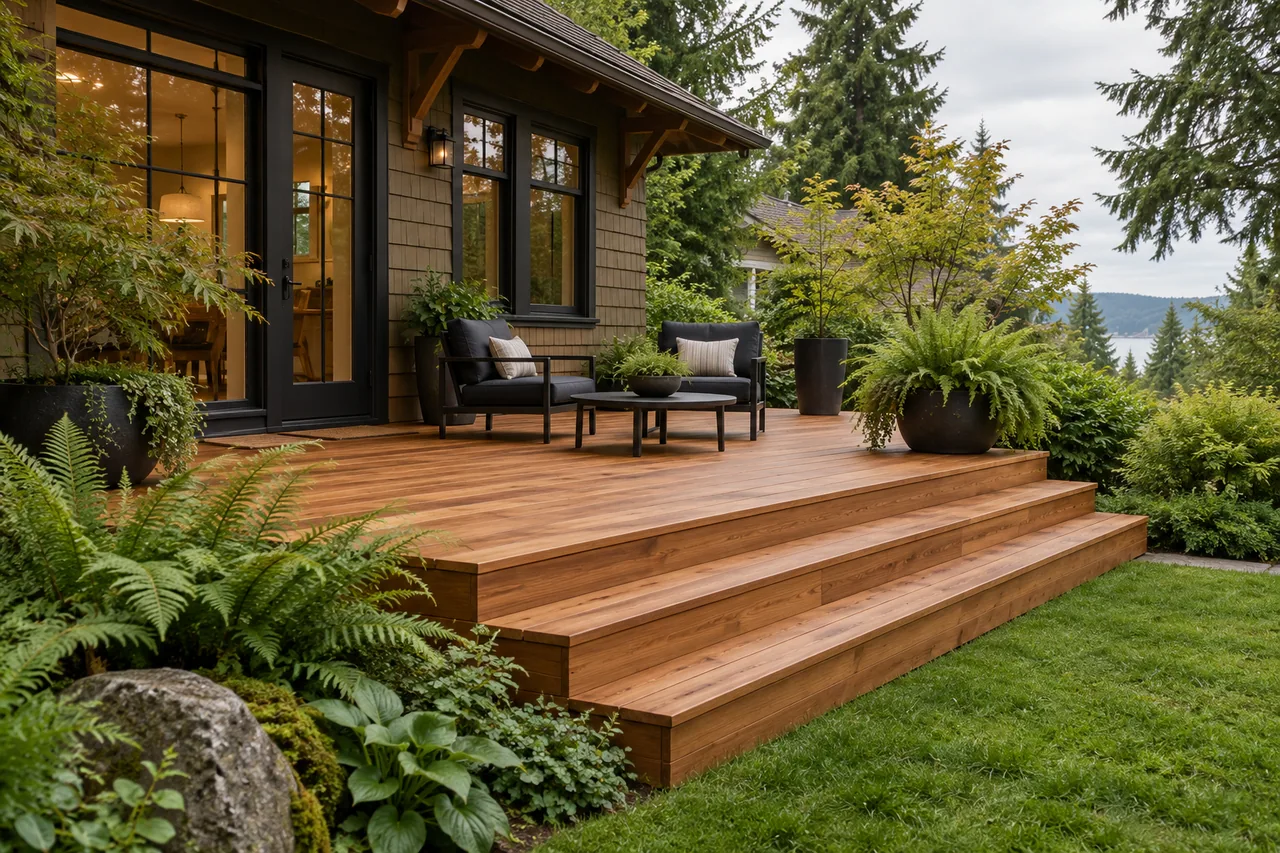
When replacement belongs on the shortlist
Ask for a professional assessment when the deck feels unstable, connections are deteriorating, or repairs keep returning. Replacement also creates an opportunity to change a cramped layout, move a stairway, or improve the transition to your yard. Appearance alone cannot tell you whether framing is reusable.
Define the entire scope
A useful written estimate separates demolition, disposal, foundations, framing, house connections, deck boards, fascia, guards and stairs. Clarify whether drawings, permit coordination and corrections to previously concealed damage are included.
- Existing footprint or a new layout
- Ground-level, elevated or multilevel construction
- Composite, PVC, natural wood or specialty surfaces
- Railing, stair, lighting and drainage options
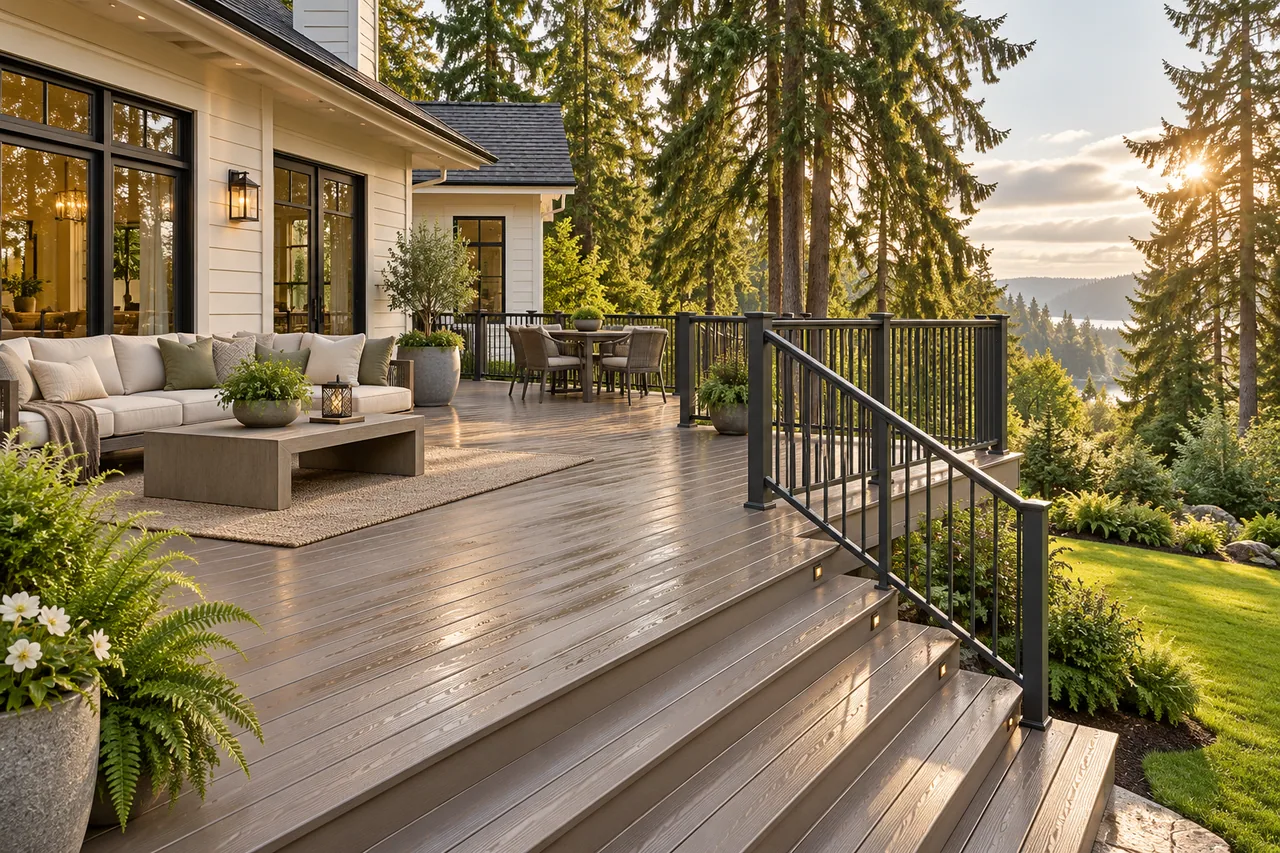
Compare replacement with resurfacing
Replacing sound framing just to change board color may be unnecessary. Keeping damaged framing to save on the quote can be a false economy. Have the contractor explain the expected condition and suitability of each component before choosing either path.
Questions worth asking
Can I keep my current footprint?
Often that is a useful starting point, but keeping the same dimensions does not establish permit exemptions or approve the existing structure. Confirm with the authority for your address.
Can I change from wood to composite?
Yes, when the frame, fastening plan and support spacing meet the selected product’s requirements. A rebuild may be necessary when the existing structure is unsuitable.
Go to the source
Official resources and manufacturer guidance used for this guide. Confirm current requirements for your project and exact product.
Trex resurfacing overview